Urgent Health Care in Kyiv
Urgent health care in Kyiv is offered by the municipal authorities and a dozen private sector providers. The scope of urgent (emergency) health care services offered by Kyiv authorities is limited by law; the costs of those services are covered by Kyiv authorities. The scope of services offered by the private sector may vary; the costs of those services are covered by a patient. Additional information on health care in Kyiv can be found in the Articles subsection below. Additional information on health care service providers can be found in the Health Care in Kyiv section.
Urgent Health Care Providers
Urgent Health Care & Emergency Medicine Center
Ukrainian
Adult & child care
Medical screening
Medical transportation
Tel: 103 or 112
A large municipal health care service provider that offers urgent health care services in Kyiv.
Please click the urgent health care provider’s box to access its website (insecure links were deactivated).
Please note that some providers may have suspended their work due to the war.
Articles
Urgent Health Care in Kyiv: Essentials
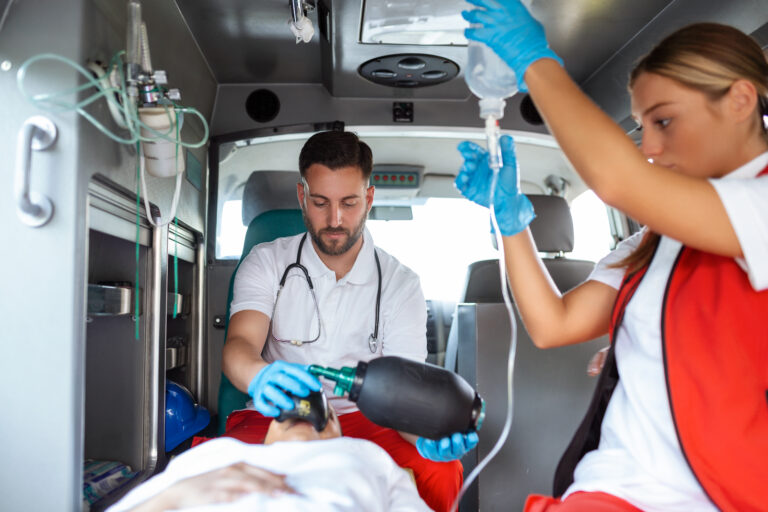
In case of a health emergency, foreigners visiting or residing in Kyiv can use governmental (mostly, municipal) and non-governmental (commercial) providers of urgent (emergency) care services.
The law requires foreign visitors who received emergency medical assistance from the Government of Ukraine (GOU), to cover the costs of such assistance before they leave Ukraine (Foreign Visitors Health Care Regulations). Costs of the GOU medical emergency assistance provided to a foreigner residing in Ukraine will be paid by the GOU.
Foreign visitors and residents who requested and received any medical emergency assistance from non-governmental (commercial) health care providers, will normally be asked to cover the assistance costs after such assistance is provided. The cost of assistance offered by a commercial health care provider may be three-five times higher than the cost of assistance offered by the municipal one.
By law, governmental emergency care services shall only be provided to a person in a critical medical condition, i.e. when someone experiences a sudden deterioration of his/her physical or mental health, which poses a direct and inevitable threat to the life or health of that person, or people nearby, and is caused by an illness, injury, poisoning or any other internal or external factor (The Health Care Fundamentals Law).
In particular, the GOU has determined that the following cases would be considered as direct and inevitable life/health threats and treated as health emergencies (The GOU Emergency Request Criteria) –
- a sudden pain in the heart area,
- a sudden respiratory disorder,
- an acute abdominal pain,
- vomiting blood,
- seizures,
- fainting,
- external bleeding,
- signs of acute infectious diseases or
- an acute mental disorder that threatens anyone’s life and health
provided it was caused by –
- poisoning,
- any type of suffocation,
- a heat stroke or hypothermia,
- an injury (severe bruises, burns, a deep wound, a fracture, a dislocation, a head injury) including one caused by an accident or a natural disaster,
- a animal bite (including those of snakes, spiders, and insects),
- an obstetric (pregnancy) emergency or
- an electric shock or lightning strike.
Correspondingly, any call/request for governmental medical emergency assistance that does not meet the GOU Emergency Request Criteria, will be treated as a low priority request or forwarded to a relevant municipal primary care provider for their action.
Alternatively, a person who is seeking medical emergency assistance, may call a non-governmental emergency care provider. Private sector providers use their own set of criteria to identify a high priority request and may respond to those requests for medical emergency assistance, which were assigned a low priority status by the municipal provider.
To call a municipal ambulance, please use telephone number 103 (Medical Emergency) or 112 (General Emergency). To call a private sector ambulance, please use the telephone number designated by a particular provider (can be found in the Health Care Providers subsection above).
Average ambulance arrival time is supposed to be about 10 minutes for locations in the city and 20 minutes for locations outside of the city (Ambulance Arrival Time Requirements). Maximum delay in arrival of an ambulance should not exceed 10 minutes (bad weather, heavy traffic, bad roads, season- or epidemic-related overload).
Paramedic assistance can also be sought from policemen, pharmacists, train/flight attendants, governmental firefighters, members of rescue teams, and a significant number of other people who, by virtue of their position/office, must provide paramedic assistance in case of a health emergency (The Emergency Health Care Law).
If needed, the ambulance team will transport the patient to the hospital that can provide adequate emergency care. Depending on the scope of the necessary care and availability of beds in the relevant hospital(s), the patient may be transported to either the Emergency Care Municipal Hospital or a general municipal hospital in Kyiv. The patient may choose to be taken to a private hospital. A child will likely be taken to Ohmatdit, the national children’s hospital located in Kyiv.
In most private clinics, the quality of accommodation, medical equipment, and non-medical services in intensive care units are noticeably better than in the municipal ones. Quality of medical services depends a lot on the qualification/experience of the doctor(s), paramedic(s) and/or nurse(s) involved in a specific case. Up to 20% of doctors/paramedics in Kyiv speak some English. Many private sector providers of urgent health care have English versions of their websites.